Signs of Herpes in Men: Early Symptoms and When to Get Tested
|
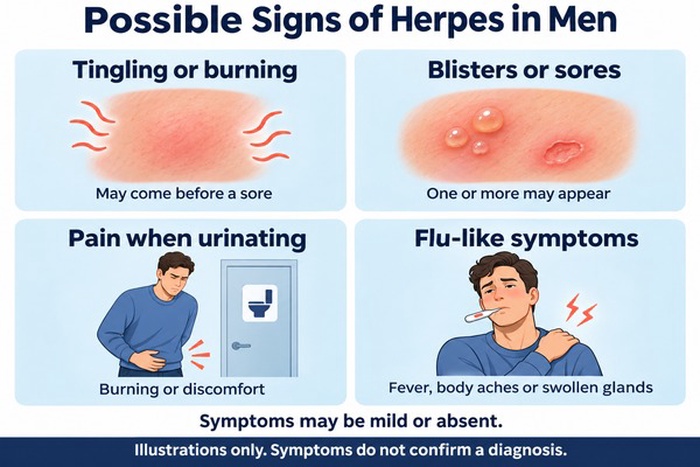
Published by PositiveSingles, the largest dating and support community for people living with herpes and other STDs. Explore PositiveSingles website or download its app for iOS or Android. A new bump, a tender patch of skin, or burning when you pee can leave you wondering what is happening. Looking up symptoms may help you decide to get checked, but it cannot tell you for certain whether you have herpes. Signs of herpes in men can include tingling, itching, painful blisters or sores around the genitals or anus, and discomfort when urinating. A first episode may also bring fever, body aches, or swollen glands. Some men have only mild symptoms, while others notice none at all. [1, 2] This guide explains possible symptoms, other causes of genital skin changes, and when to seek testing. What Are the Early Signs of Herpes in Men?The first signs you notice may be a feeling rather than a visible change. An area of skin can itch, tingle, burn, or feel tender before a sore appears. These sensations are sometimes called a prodrome, meaning warning symptoms before an outbreak. They can occur with recurrent episodes as well. [3] When visible symptoms develop, herpes may cause one or more fluid-filled blisters. These can open into painful sores. Someone with a more noticeable initial episode may also feel unwell, with fever or tender glands. But a mild episode can be easy to overlook, and you do not need to have every symptom for herpes to be possible. [1, 2] A first recognized episode can be more uncomfortable than later outbreaks. Recurrences tend to be shorter and milder, although the experience varies. Do not wait for a cluster of blisters or flu-like symptoms before asking about an unexplained genital sore. [1]
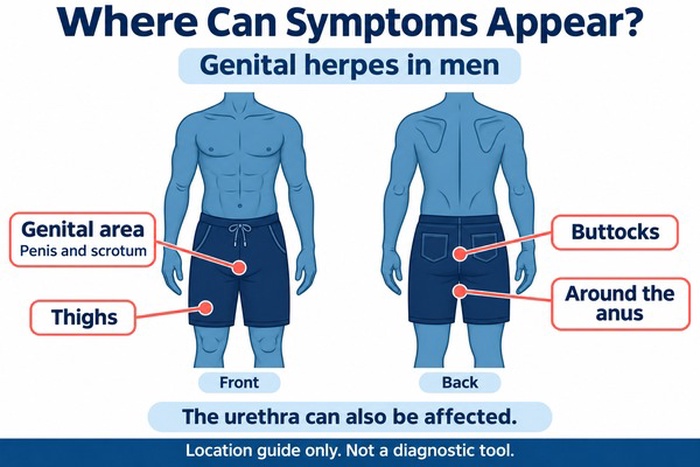
How soon can symptoms appear? When an initial outbreak occurs soon after infection, symptoms often begin within two days to two weeks. However, some people first notice symptoms much later. Having no symptoms during the first two weeks does not rule out herpes. [4, 5] Where Can Herpes Symptoms Appear in Men?Genital herpes symptoms can involve the penis, scrotum, skin around the anus, buttocks, or thighs. Sores can also occur in the urethra, the tube that carries urine out of the body. You may not be able to see every affected area yourself. [4]
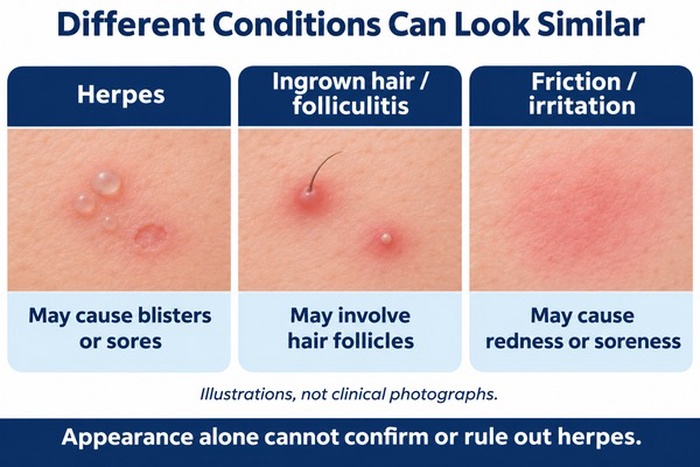
Pay attention to discomfort as well as appearance. Burning when you pee or a sore near the anus deserves assessment even when there is no obvious blister on the penis. Those symptoms can have several causes, so their location alone does not identify herpes. [2, 6] Both HSV-1 and HSV-2 can cause genital herpes. HSV-1 commonly causes cold sores around the mouth and can also reach the genitals through oral sex. A lip sore and a genital sore involve different locations, but location or appearance cannot establish which HSV type is involved. [1, 7] What Can Be Mistaken for Herpes?A new genital bump does not automatically mean herpes. Mild HSV symptoms may be mistaken for a pimple or ingrown hair, while other conditions can cause genital sores or irritation. That overlap is a reason to get checked rather than trying to choose the closest-looking online photo. [1, 6]
Possible alternative explanations include: · Ingrown hairs or folliculitis. Inflamed hair follicles can produce bumps in hair-bearing areas, sometimes after shaving. [8] · Friction or skin irritation. Trauma and noninfectious skin conditions can also cause genital lesions. [6] · Other infections. Syphilis is an important possible cause of genital ulcers, and more than one infection can be present at the same time. [6] No single detail gives you a dependable answer. Having only one sore, little pain, or a bump that looks different from a photograph is not enough to confirm or exclude HSV. CDC guidance notes that even medical history and an examination alone can misidentify the cause of genital ulcers. [6] Avoid squeezing, picking, or repeatedly rubbing the area to see how it responds. Instead, arrange an assessment and describe what you noticed, when it began, and whether you recently shaved or used a new product. A clinician can decide which tests are useful. [5, 6, 8] Can Men Have Herpes Without Symptoms?Yes. Many people with genital herpes have no noticeable symptoms or have signs so mild that they do not recognize them. An outbreak does not have to resemble the more obvious blisters often shown in educational images. [1] HSV can also be released from affected skin without visible sores, a process called asymptomatic viral shedding. That means normal-looking skin does not establish someone's HSV status or guarantee there is no transmission risk. [7] If symptoms appear after months or years without problems, that does not prove the infection was recently acquired. The NHS explains that symptoms can take a long time to appear and that a sore swab cannot identify who passed on the infection or how long someone has had it. Avoid drawing conclusions about a partner from the timing alone. [5] When Should You Get Checked for Herpes?The next step depends on whether you have a fresh sore to test, a history of symptoms, or a possible exposure.
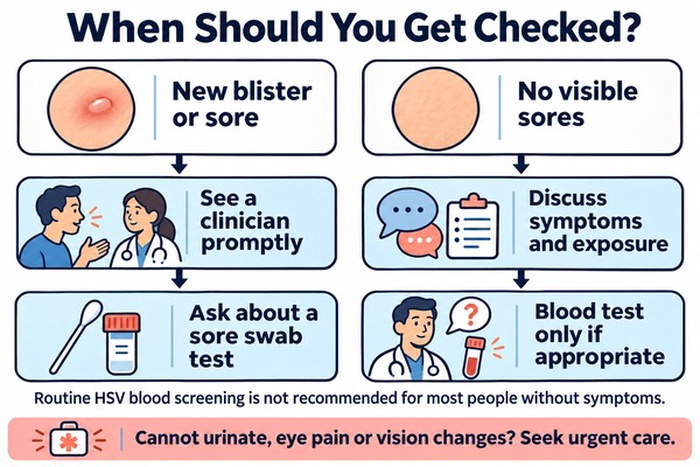
If You Have a New Blister or SoreContact a healthcare professional or sexual health clinic promptly for a new, unexplained genital or anal sore. A clinician may swab a fresh sore for an HSV nucleic acid amplification test (NAAT), such as PCR. In some settings, a viral culture may be used instead. [7] A negative swab does not always rule out HSV, particularly when the lesion is older or healing. Your clinician may consider the result alongside your symptoms and discuss whether further evaluation is needed. Depending on the findings, they may also recommend tests for syphilis or other infections. [6, 7] If You Have No Visible SoresTalk about testing if a partner has genital herpes or you have had recurring unexplained symptoms. A blood test may be useful in selected circumstances, but the CDC does not recommend routine herpes screening for most people without symptoms. False-positive results are one reason testing needs careful interpretation. [9] An HSV-1 antibody result cannot tell whether an infection is oral or genital. Some HSV-2 blood test results need confirmation, and testing too early can miss infection. Ask what test is being offered, when it will be informative, and whether confirmation might be needed. Herpes testing is not necessarily included in a general STI panel. [7, 9] Symptoms That Need Urgent AttentionSeek urgent medical care if you cannot pass urine. Eye pain, light sensitivity, or vision changes also need prompt assessment because HSV can affect the eye. [3, 10] While you are waiting for an assessment, pause sexual contact involving the affected area. If genital herpes is suspected, avoid oral, vaginal, and anal sex during warning symptoms or active sores and until sores have fully healed. [5] What Happens After a Herpes Diagnosis?A diagnosis gives you a clearer path to treatment and risk reduction. Antiviral medicines can help manage outbreaks. Treatment may be taken for episodes or daily, depending on the pattern of symptoms and a discussion with your clinician. There is no cure at present, but treatment can make a practical difference. [7] Relationships do not have to stop after a diagnosis. Talking with partners, avoiding sex during outbreaks, and using condoms can reduce transmission risk, although condoms do not cover every area of skin that can release HSV. Daily suppressive treatment can also lower transmission risk in certain circumstances; ask your clinician how that applies to you. [1, 7] For the next steps beyond symptoms and testing, read how to live with herpes as a man, including emotional support and relationship considerations. If you would like to meet people who understand the experience, join PositiveSingles, a dating and support community for people living with herpes and other STDs.
  This article provides general information and cannot diagnose a skin change or replace individual medical advice. Sources
|