Dating Someone With HSV-1 When You Have HSV-2: A Guide
|
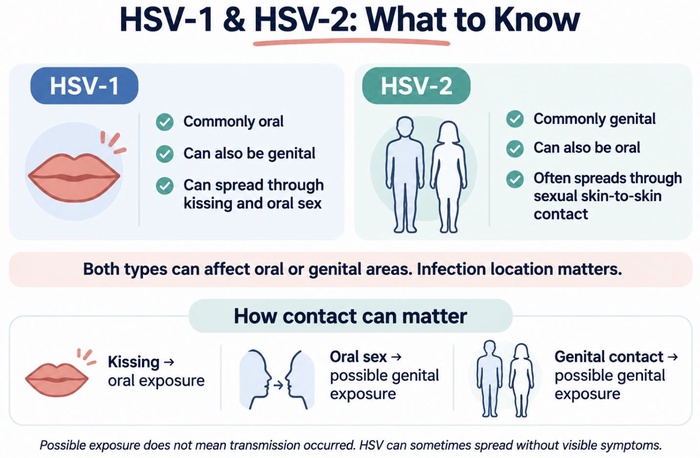
Dating Someone With HSV-1 When You Have HSV-2“I thought you had HSV-2, too.” “I have HSV-1. I get cold sores. I thought I'd told you.” Imagine you've been seeing someone you met on PositiveSingles for a few weeks. You're at their apartment, deciding whether to stay over. The first time herpes came up, they said, "Me too." You were so relieved that you forgot to ask which type. You've had genital HSV-2 for years. You know how to talk about it, but this feels different. Now you're wondering whether kissing someone with HSV-1 could put you at risk. You're also wondering why neither of you thought to ask a few more questions earlier. Having different types of herpes doesn't mean a relationship can't work. But understanding each other's infection history and possible transmission risks can help you make informed decisions about intimacy. Can You Get HSV-1 If You Already Have HSV-2?HSV-1 and HSV-2 are two different types of herpes simplex virus. Both can affect the mouth or genitals, although they have different patterns of infection.
Having HSV-2 doesn't give you a simple yes-or-no answer about your susceptibility to HSV-1. Some cross-protection may occur, but you shouldn't assume you have complete immunity. The location of each person's infection matters, too. Someone with oral HSV-1 has different transmission considerations from someone with genital HSV-1.
The important thing is to understand what each person has rather than assuming that having different HSV types means there is no risk. What About the Kiss You Already Shared?This is probably the first question on your mind. If your partner has oral HSV-1, kissing can expose you to the virus. Transmission is more likely when cold sores are present, but HSV-1 can also spread when there are no visible symptoms. That means your kiss created a possibility of exposure, not proof that transmission occurred. There's another important distinction: if your partner has genital HSV-1 rather than oral HSV-1, ordinary kissing doesn't expose you to their genital infection. Here are three situations worth understanding:
If you've already kissed, there's no way to determine from that encounter alone whether transmission happened. If you're concerned or develop symptoms, speak with a healthcare professional about appropriate testing and next steps. For more information, see the CDC's guide to genital herpes and transmission. What Should You Discuss With Your Partner?When both people have HSV, it's easy to assume that having the same general diagnosis means you already understand each other's situation. But there are a few important questions worth discussing. 1. Where is your HSV infection?Is it oral or genital? Understanding the infection location helps you identify which types of contact may carry transmission risks. 2. Have you experienced any recent outbreaks or warning symptoms?Cold sores, genital sores, tingling, or burning can be relevant when deciding whether to postpone intimate contact. 3. What precautions are we both comfortable taking?Discuss condoms, barriers during oral sex, avoiding intimate contact during outbreaks, and whether antiviral medication is appropriate. You don't need to turn the conversation into a medical interview. The goal is to understand each other and make decisions together. Can You Have Sex When You Have Different HSV Types?Yes. Couples with different HSV types can have intimate relationships. However, neither person's diagnosis automatically eliminates the risk of transmission to the other. If you have genital HSV-2, your partner may still be susceptible to HSV-2, even if they already have HSV-1. Some precautions can help reduce transmission risk:
The CDC's herpes treatment guidelines explain the role of suppressive antiviral treatment in reducing genital HSV-2 transmission. No prevention method guarantees zero risk. The best approach is to understand your individual circumstances and make informed decisions together. “Would You Have Kissed Me If You'd Known?”You've been thinking about whether the kiss could have exposed you to HSV-1. Your date is wondering whether it would have happened at all. It's a difficult question because it isn't only about herpes. It's also about trust, communication, and feeling that both people have enough information to make their own choices. You explain that you weren't trying to hide anything. You simply hadn't realized how much you still needed to discuss. Your partner may have questions about your HSV-2, too. Neither of you has to know everything immediately. What matters is being willing to have an honest conversation without making the other person feel judged. Later, after you've gone home, a message comes through. "Do you still want to go to that bookstore on Sunday?"You do. You still want to talk about the kiss, too. But now you both know which questions to ask. Different HSV Types Don't Have to Define Your Relationship Understanding infection locations, discussing transmission risks, and respecting each other's boundaries can make intimate decisions easier. You don't have to figure everything out in one conversation. Start by asking questions, sharing accurate information, and deciding together what feels right. If you're looking to meet people who understand HSV and the conversations that can come with dating, PositiveSingles offers a community focused on people living with herpes and other STIs. Ready to meet people who understand your experience? |