What Is the Safest Way to Date With Herpes? 2026 Guide
|
Being diagnosed with herpes can make ordinary dating questions suddenly feel much more complicated. When should you tell someone? Is kissing safe? Can you still have oral sex? What happens if you meet someone you really like but they do not have herpes? If you are wondering what is the safest way to date with herpes, the answer is not to stop dating or avoid intimacy entirely. The safest approach is to combine honest communication, awareness of symptoms, appropriate antiviral treatment, barrier protection and shared decisions about sexual activity.
Herpes is extremely common, and many people who carry herpes simplex virus do not know they have it because symptoms can be mild or completely absent. The World Health Organization estimates that hundreds of millions of people worldwide have HSV-2, the virus responsible for most genital herpes infections. HSV-1 is even more widespread and can cause either oral or genital herpes. Understanding how common HSV is can help put a diagnosis into perspective while still taking transmission and partner communication seriously. Dating with herpes therefore is not an unusual situation, although stigma can make it feel that way. The goal is not to promise a partner zero risk because no responsible person can make that promise. Instead, safer dating means understanding when transmission is most likely, knowing how to reduce that risk, and giving both people enough information to make decisions they feel comfortable with. What Is the Safest Way to Date With Herpes?The safest strategy is a combination of several precautions rather than relying on a single method. Avoid sexual contact during outbreaks or when warning symptoms are developing, consider daily suppressive antiviral medication with a healthcare provider, use condoms or other barriers consistently, and tell sexual partners about genital herpes before beginning a sexual relationship. Public health guidance generally recommends combining several of these measures when reducing HSV-2 transmission is a priority. It is important to understand that condoms reduce risk rather than eliminating it. Herpes spreads primarily through skin-to-skin contact, and viral shedding can occur from skin that looks completely normal. Because condoms do not cover every part of the genital area, transmission can still occur even when condoms are used correctly. That does not make prevention pointless. Think of herpes risk reduction as layers rather than a single protective wall. One precaution might lower risk somewhat, while several precautions used together provide a more thoughtful approach to protecting a partner. For example, imagine someone named Lisa who has genital HSV-2 and has recently started dating again. Instead of waiting until an intimate moment to discuss it, she talks with her partner before they have sex. She also knows the early sensations that sometimes precede an outbreak, avoids sexual contact when they appear, uses condoms and asks her doctor whether daily antiviral medication makes sense for her. No single step creates zero risk, but together they make the relationship safer and more transparent. Understand How Herpes Is Actually TransmittedOne of the most useful things you can do before dating is understand how herpes behaves. HSV-1 is commonly associated with oral herpes, although it can also cause genital herpes through oral-to-genital contact. HSV-2 primarily causes genital herpes and is usually transmitted sexually through contact with genital or anal skin, sores or infected secretions. A common misunderstanding is that herpes can only spread when visible sores are present. In reality, both HSV-1 and HSV-2 can sometimes be transmitted when the skin looks normal because the virus can be released from infected skin without noticeable symptoms. This process is often called asymptomatic viral shedding. At the same time, transmission risk is not constant. Herpes is particularly contagious when sores or other active symptoms are present. This is why recognizing your own outbreaks and early warning signs is one of the most practical skills for dating safely. Some people experience tingling, itching, burning or unusual sensitivity shortly before sores develop. These early sensations are often described as prodromal symptoms. When they occur, it is safer to postpone sexual contact rather than waiting to see whether visible lesions appear. Do Not Have Sex During a Herpes OutbreakAvoiding sexual contact during an active outbreak is one of the most important ways to reduce the chance of transmitting herpes. Herpes is generally more contagious when sores or other active symptoms are present. Public health guidance recommends avoiding sexual activity when lesions or early warning symptoms occur. This includes more than vaginal intercourse. Depending on where the infection is located, oral sex, anal sex and direct genital-to-genital rubbing may expose a partner to infected skin. Someone with an oral cold sore should also avoid kissing and oral sex while symptoms are active because oral HSV-1 can be transmitted to another person's mouth or genital area. Couples sometimes create a simple rule: if either person notices suspicious symptoms, penetrative or skin-to-skin sexual activity involving the affected area is postponed. Intimacy does not necessarily have to disappear completely. Couples can choose other forms of affection that do not involve contact with the affected area. This approach can actually remove some anxiety from the relationship. Instead of debating the risk every time symptoms appear, both partners already know what they have agreed to do. Learn Your Personal Warning SignsHerpes does not look or feel exactly the same for everyone. Some people experience obvious recurring sores, while others have mild irritation that can easily be mistaken for shaving irritation, an ingrown hair or another skin condition. Still others experience few or no noticeable recurrences. Over time, many people become better at recognizing their own patterns. You might notice tingling, itching or tenderness before an outbreak, or you may discover that outbreaks occasionally follow illness or periods of significant stress. Some people also notice patterns involving sleep disruption, other illnesses or changes in general health. Keeping a simple private record can help if your symptoms are difficult to interpret. Note when an outbreak starts, what the first symptoms felt like and how long it lasted. The purpose is not to obsessively monitor your body but to become familiar enough with it to recognize situations when sexual contact should temporarily stop. If you are unsure whether a symptom represents herpes, a healthcare professional can help. Self-diagnosing every bump or irritation is often unreliable. Talk to a Doctor About Antiviral TreatmentAntiviral medication is one of the most useful tools available for managing genital herpes. Commonly prescribed antiviral medicines include acyclovir, valacyclovir and famciclovir. They do not remove HSV from the body, but they can shorten outbreaks, decrease recurrence frequency and, in some situations, lower transmission risk. Treatment can be used in different ways. Some people take medication only when an outbreak begins, known as episodic therapy. Others take medication every day as suppressive therapy, particularly when they experience frequent outbreaks or want an additional strategy for reducing transmission to a partner. Suppressive therapy can significantly reduce genital herpes recurrences for many people with frequent outbreaks. Daily valacyclovir has also been shown to reduce HSV-2 transmission in some couples in which one partner has symptomatic genital HSV-2 and the other does not. Medication decisions should still be individualized. Genital HSV-1 generally recurs and sheds less frequently than genital HSV-2, for example, and the evidence for using suppressive therapy specifically to prevent genital HSV-1 transmission is more limited. Your HSV type, symptoms, recurrence frequency, other health conditions and relationship situation are all useful things to discuss with a healthcare provider. Use Condoms, but Understand Their LimitsCondoms remain an important part of safer sex when dating with herpes. Used consistently and correctly, they can reduce exposure to infected genital skin and also provide protection against several other sexually transmitted infections. The limitation exists because HSV can be present on skin surrounding the genitals that a condom does not cover. Someone could therefore follow condom instructions perfectly and still potentially transmit or acquire herpes. That possibility should not be interpreted as an argument against condoms. It simply means condoms work best as one component of a broader risk-reduction strategy. Barrier methods may also be considered for oral sex. Depending on the sexual activity, condoms or dental dams can reduce direct contact with oral or genital surfaces. Couples should still avoid sexual contact involving an affected area when herpes symptoms are active. Using barriers also helps address something that can be forgotten after a herpes diagnosis: herpes is not the only STI that matters. Dating safely means thinking about your overall sexual health, not just HSV. Tell a Partner Before Sexual ContactDisclosure can be the most emotionally difficult part of dating with herpes, but it is also one of the most important. A sexual partner should have enough information to make an informed decision before sexual activity creates a realistic possibility of HSV transmission. You do not necessarily need to tell someone on the first message or before the first cup of coffee. At that stage, you may not even know whether you want to see the person again. A practical approach is to disclose after enough trust has developed to discuss private information but before sexual contact creates a transmission risk. Imagine that you have had four good dates with someone and feel the relationship becoming physical. Instead of waiting until you are both undressed, choose a private, relaxed time to talk. You might explain that you have genital herpes, how you manage it and what steps you take to reduce transmission. Then give the other person room to react and ask questions. Disclosure works better as a conversation than as a confession. Do Not Turn Disclosure Into an ApologyHow you describe herpes often affects how the conversation feels. If you present the diagnosis as a terrible secret or repeatedly apologize for having it, your partner may assume the situation is much more medically alarming than it actually is. Calm, factual language usually creates a healthier conversation. You can explain that HSV is a common viral infection, that transmission can occur even without symptoms and that you take specific precautions. Then explain which type you have if you know it, whether you get outbreaks and whether you use antiviral medication. Avoid making promises such as saying that your partner definitely will not get it. It is equally important to avoid minimizing the issue. A prospective partner has the right to decide what level of risk they feel comfortable accepting. Respecting that decision is part of dating safely. Some people will want more information before deciding. Others may already know someone with herpes or have HSV themselves. A person's initial surprise does not always mean rejection. Sometimes they simply need time to understand what you have told them.
Dating Someone Who Does Not Have HerpesA relationship in which one person has HSV and the other does not is sometimes described as an HSV-discordant relationship. These relationships are common and can include healthy sexual relationships. The central issue is informed risk management rather than trying to pretend transmission is impossible. Suppose Daniel has HSV-2 and his new partner does not. They decide together that Daniel will discuss suppressive therapy with his doctor, they will use condoms, and they will avoid sex whenever he notices symptoms. His partner understands that these steps can lower risk but cannot completely eliminate it. That shared understanding changes the dynamic. Daniel does not have to secretly calculate risk every time they are intimate, while his partner is actively participating in decisions rather than being protected without their knowledge. This kind of teamwork is often more sustainable than letting one person carry all the anxiety. Can Two People With Herpes Date Without Worrying About It?Meeting someone who also has herpes can simplify certain disclosure conversations, but it does not automatically remove every sexual-health consideration. The two people may have different HSV types or different infection locations. They may also have other STIs to consider. For example, one person could have genital HSV-2 while another has only oral HSV-1. Saying that both people have herpes does not necessarily mean the infections are identical. If understanding the exact risks matters to you, knowing each person's HSV type and location can be useful. Standard safer-sex principles therefore still apply. Couples should also consider STI screening based on their individual sexual histories and risk factors. A herpes-positive dating community may make it easier to meet people who already understand HSV, but it should not replace good sexual-health habits.
  Protect Your Privacy When Dating OnlineDating safely with herpes includes digital safety as well as sexual-health safety. You do not need to place your herpes status in a publicly visible bio unless you personally want to. Disclosure to someone you may become sexually involved with is different from making private medical information available to every person browsing a dating app. Early in a conversation, avoid sharing your home address, workplace details, financial information or highly identifying private photos with someone you have never met. Use an app's messaging system until you feel comfortable moving the conversation elsewhere. Look for privacy settings that allow you to control who sees photos or profile information. When meeting someone for the first time, the normal rules of online dating still matter. Meet in a public place, arrange your own transportation when possible and let someone you trust know where you are going. Herpes may be the issue occupying most of your attention, but ordinary dating safety should not disappear because of it. Remember That Your Partner's Sexual Health Matters TooAfter a herpes diagnosis, it is easy for every sexual-health conversation to revolve around your HSV status. In reality, both partners bring a health history into the relationship. Your partner may need to consider testing for other STIs, contraception, HIV prevention or other issues. HSV-2 infection is associated with an increased risk of acquiring HIV. People with genital herpes symptoms may therefore want to discuss appropriate HIV testing and broader sexual-health care with a healthcare provider. New couples may decide to have STI screening together before stopping condoms or changing other precautions. This can turn an uncomfortable conversation about one person's infection into a more balanced discussion about both people's sexual health. That framing is both more realistic and more respectful. Be Especially Careful During PregnancyPregnancy requires additional medical guidance because neonatal herpes, although uncommon, can be serious. The greatest concern occurs when genital herpes is acquired for the first time late in pregnancy, when there may not be enough time for protective antibodies to develop before delivery. Someone who is pregnant and has genital herpes should tell the healthcare professionals managing the pregnancy. A partner with genital herpes should also discuss prevention strategies with the pregnant partner's clinician, particularly if the pregnant person has never had HSV. Pregnancy is not a situation where generic online advice should substitute for medical care. The exact recommendations can depend on whether the infection is established or newly acquired, the HSV type, symptoms and stage of pregnancy. If pregnancy is part of your relationship now or may become relevant soon, bring HSV into prenatal or preconception discussions early. What Does Safe Really Mean When Dating With Herpes?No strategy can guarantee that HSV will never be transmitted between sexually active partners. Even people who have no visible symptoms can sometimes shed the virus, and condoms do not cover every potentially infectious area. Anyone claiming that a particular medication, dating app or sexual technique makes herpes transmission impossible is oversimplifying the evidence. But not zero risk is very different from saying that nothing can be done. Avoiding sexual activity during outbreaks, recognizing prodromal symptoms, using condoms appropriately and discussing suppressive antiviral treatment can all be parts of a sensible risk-reduction plan. Equally important is informed consent. A partner who understands your diagnosis and voluntarily chooses intimacy is participating in the decision with you. That is ultimately the safest framework for dating with herpes: accurate information, practical prevention and two people making the decision together. Frequently Asked Questions About Dating With HerpesCan I date normally if I have herpes?Yes. Herpes does not prevent someone from dating, forming long-term relationships, marrying or having a satisfying sex life. What changes is that you should understand transmission risk and discuss genital herpes with sexual partners before beginning a sexual relationship. Treatment and risk-reduction measures can make the condition much easier to manage. Many people with herpes continue to have fulfilling romantic and sexual relationships. When should I tell someone I have herpes?There is no universal number of dates after which disclosure has to happen. You generally do not need to tell every person before a first date, but a sexual partner should know before sexual activity that could expose them to HSV. Choose a private moment when neither of you is rushed, intoxicated or already in the middle of becoming intimate. Giving someone time to process the information usually produces a better conversation than disclosing seconds before sex. Can herpes spread when I have no outbreak?Yes. HSV can sometimes be transmitted when there are no visible sores or obvious symptoms because asymptomatic viral shedding can occur. That is one reason precautions should not be limited only to days when an outbreak is visible. At the same time, transmission risk is generally higher when active sores or symptoms are present. Do condoms completely prevent herpes transmission?No. Condoms can lower the risk of genital herpes transmission but cannot eliminate it because HSV may be present on surrounding skin that a condom does not cover. Consistent condom use is still worthwhile and also provides protection against several other STIs. Condoms work best as one part of a broader prevention strategy rather than as the only precaution. Does taking valacyclovir make it impossible to give herpes to my partner?No. Daily suppressive antiviral medication can lower transmission risk in certain situations, but it does not make transmission impossible. Valacyclovir has been shown to decrease HSV-2 transmission in some couples in which one partner has genital HSV-2 and the other does not. Medication can be combined with other precautions, including avoiding sex during outbreaks and using condoms. Should I avoid sex if I feel tingling but cannot see a sore?Yes, postponing sexual contact is the safer choice. Tingling, burning or itching can sometimes be prodromal symptoms that occur before an outbreak becomes visible. Avoiding sexual activity while these symptoms are present can help reduce transmission risk. If you frequently have difficulty determining whether symptoms represent herpes, consider discussing them with a healthcare professional. Is it safer to date another person who already has herpes?It can make disclosure and stigma easier, but it does not automatically make every sexual encounter risk-free. Two people may carry different HSV types or have infections in different locations, and either person could have other STIs. It is still worthwhile to talk about HSV type, symptoms, protection, testing and overall sexual health. A shared herpes diagnosis can simplify one part of the conversation, but it does not replace that conversation. Final Conclusion: What Is the Safest Way to Date With Herpes?So, what is the safest way to date with herpes? There is no single trick and no way to reduce transmission risk to absolute zero. The most reliable approach is layered: understand your HSV type when possible, recognize outbreaks and early warning symptoms, avoid sexual contact while symptoms are present, use condoms or other barriers appropriately, discuss suppressive antiviral therapy with a healthcare professional and disclose genital herpes before sexual intimacy. Just as importantly, do not let the diagnosis become the entire story of your dating life. A herpes diagnosis changes some conversations and precautions, but it does not eliminate dating, intimacy or long-term relationships. A good partner does not need to react perfectly within the first few seconds. What matters is that both people can talk openly, ask questions and make informed choices without pressure. If mainstream dating makes disclosure feel exhausting, a herpes-focused dating community can also be one way to meet people who already understand HSV. Whatever platform you use, keep the same standard: protect your privacy, communicate honestly, manage your health responsibly and give both people a genuine choice about what happens next.
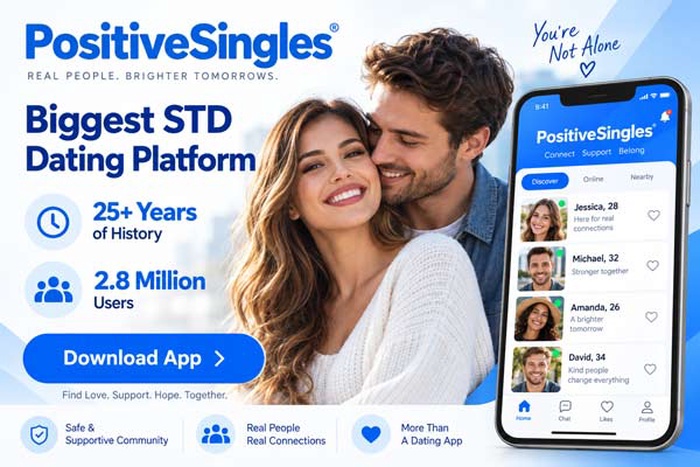
If you feel alone or nervous about dating again, you might find comfort in connecting with other singles with Herpes. PositiveSingles, the largest online Herpes dating support website, offers a compassionate environment with 2.6 million online STD singles. You can place a profile to meet nearby singles with Herpes here! Sources
|